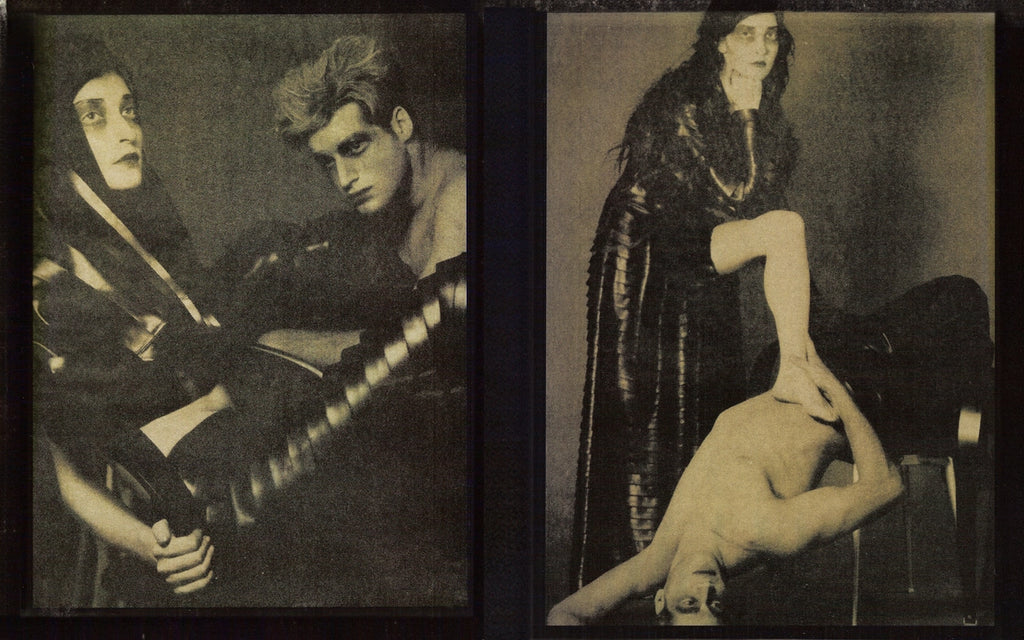
 © Jitrois
Haute couture and ready-to-wear, the two expressions structure all of fashion and yet are constantly confused. One is a legally protected appellation, reserved for a handful of houses. The other dresses the entire world, from basics to luxury pieces. At Jitrois, whose craft borrows from the first while living in the second, we would like to make things clear once and for all.
In Brief
- Haute couture has been a protected appellation in France since 1945, reserved for the houses on an official list decided each year.
- A haute couture piece is unique, made to measure by hand, with fittings, in a Parisian atelier.
- Ready-to-wear is produced in series in standard sizes, from the mass market to luxury.
- Between the two exist made-to-measure and made-to-order, offered by certain luxury houses.
- Jitrois leather couture applies the methods of couture to the leather garment, in the spirit of a constructed, adjustable piece.
Haute Couture, an Appellation Under Protection
Contrary to what everyday usage suggests, haute couture is not a synonym for luxury, it is a legally protected appellation in France since 1945. Only houses on an official list, re-examined every year under the aegis of the Fédération de la Haute Couture et de la Mode, may claim it.
The criteria are demanding. The house must create made-to-measure pieces for its private clients, with successive fittings, maintain an atelier in Paris with a minimum full-time staff of seamstresses and technicians, and present its collections each year during the official Paris calendars. A haute couture gown is a unique piece, built on the body of the woman who will wear it, and its price reflects the hundreds of hours of atelier work.
Ready-to-Wear, Fashion in Series
Ready-to-wear was born in the middle of the twentieth century with a simple promise, to offer finished designer garments, produced in series in standard sizes, immediately available in store. No fittings, no individual pattern, you choose your size and the piece is yours.
The term actually covers an immense spectrum, from mass retail to luxury ready-to-wear, where materials, cut and making can reach a remarkable level of standard. The difference with couture is therefore not always a difference in quality, it is first a difference in the mode of production, the series versus the unique piece.
The Differences in One Table
| Criterion | Haute couture | Ready-to-wear |
|---|---|---|
| Status | Protected appellation, annual official list | Free term, from mass market to luxury |
| Production | Unique piece, made to measure, fittings | Series, standard sizes |
| Making | By hand, mandatory Parisian atelier | Variable, from industrial to atelier |
| Price | Tens of thousands of euros | From accessible to luxury |
| Clientele | A few hundred clients worldwide | Everyone |
Between the Two, Made-to-Measure
The border is not sealed, a third territory exists. Made-to-measure starts from a pattern created for one person, made-to-order adapts an existing model to a client’s measurements. These practices, inherited from couture, survive in a few luxury houses that refuse to choose between the series and the unique piece.
This is the case at Jitrois, where a piece can be crafted in a specific colour or size, including ordered remotely. This direct link between the atelier and the person who will wear the garment is one of the deepest markers of the couture spirit.
What Leather Couture Borrows from Haute Couture
Our craft illustrates precisely this meeting zone. Leather couture, the discipline born at Jitrois in the 1980s, applies the methods of couture to the leather garment, pattern-making, constructed volumes, embroidery, atelier finishing. The material follows the same standard, a plongé nappa lambskin whose grain is preserved, all the way to the invention of stretch leather that embraces the body like a second skin.
Our collections live in luxury ready-to-wear, with that made-to-measure option inherited from couture. This singular position, our heritage tells it better than any definition, couture is not for us an administrative category, it is a way of building a garment. You can judge for yourself on jitrois.com, or in our article on what the House is worth.
Frequently Asked Questions
Can a brand freely call itself haute couture?
No. In France, haute couture has been a legally protected appellation since 1945. Only the houses appearing on an official list, decided each year, may use it. They must, among other things, create made-to-measure pieces for their private clients, with fittings, and maintain a Parisian atelier. Any other use of the term is improper.
Is luxury ready-to-wear of lower quality than haute couture?
Not necessarily. Luxury ready-to-wear can call upon exceptional materials and true atelier work, the difference lies in the mode of production. Haute couture is a unique piece built on a client’s body, ready-to-wear is produced in series in standard sizes, even when the making is demanding.
What do made-to-measure and made-to-order mean?
Made-to-measure starts from a pattern created for one person, with successive fittings. Made-to-order adapts an existing model to a client’s measurements, without starting from scratch. Between standard-size ready-to-wear and fully made-to-measure haute couture, some houses, including Jitrois, offer pieces adjusted to the client, including remotely.
Where does leather couture fit in all this?
Leather couture applies the methods of couture, pattern-making, sculpted cuts, hand finishing, to a leather garment. It is not an official appellation, it is a discipline. At Jitrois, it lives in luxury ready-to-wear collections with a made-to-measure option, the couture spirit applied to skin.