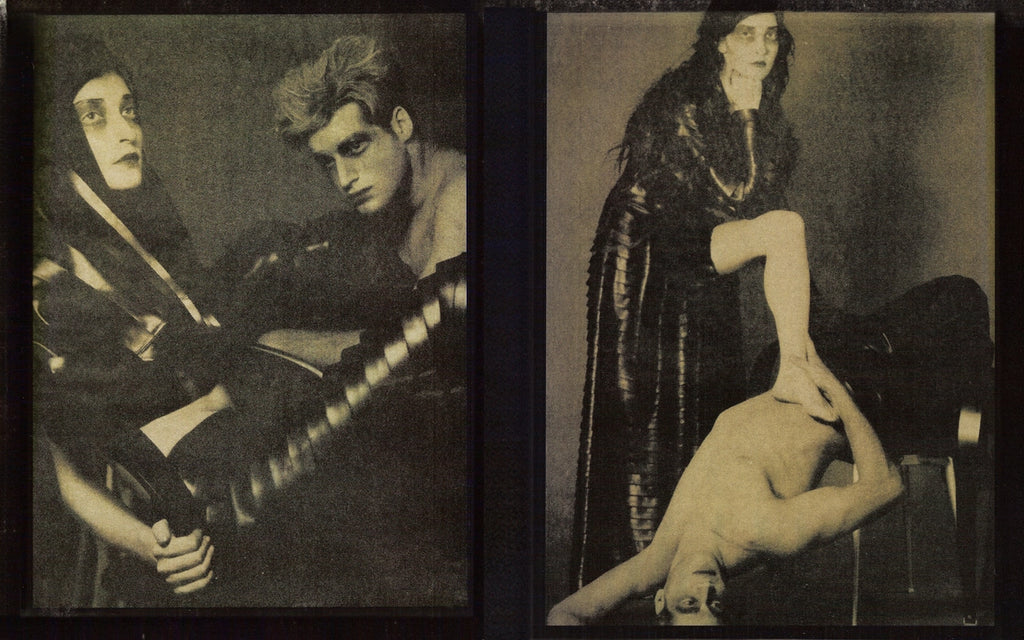
 © Jitrois
The history of leather in fashion is a story of remarkable transformation. From a simple utilitarian protective material, leather gradually established itself as a symbol of freedom and self-expression, before eventually conquering the greatest fashion houses and ateliers. At Jitrois, we place our work within this historical continuum, offering a modern and refined interpretation of this vestimentary heritage.
Leather as a Protective Material
Before becoming a fashion element, leather first served fundamental needs. Since prehistoric times, animal hides protected humans from cold and the elements. The Egyptians perfected these ancestral techniques, dyeing and working leather into a noble material. In ancient Greece and Rome, leather equipped warriors and civilians alike: sandals, armor, harnesses.
The Middle Ages saw artisans refine their craftsmanship. The tanning of hides progressed slowly, making the material more supple and resilient. Yet leather remained a luxury good, available only to those with sufficient means.
The Birth of Modern Legend: Aviation and Motorcycles
The twentieth century marked a turning point when leather transitioned from a utilitarian role to that of a cultural icon. The 1920s and 1930s were decisive: leather became the uniform of pilots and aviators. Protected against the cold of unpressurized cockpits, the aviator jacket acquired its distinctive silhouette. Years later, motorcyclists adopted it for its durability and striking appearance.
The leather jacket suddenly embodied something far greater: a certain virility, adventure, courage in the face of the elements. The object transcended its function.
The Age of Rebellion: The 1950s and 1960s
The true revolution arrived on screen. In Rebel Without a Cause, James Dean personified a rebellious generation in a black leather jacket, jeans, and boots. Marlon Brando in The Wild One reinforced the myth. These images became archetypes: leather represented youth, refusal of established order.
Elvis Presley abandoned the suit and tie to appear dressed entirely in black leather. Fans, captivated, adopted the style. Leather was no longer simply a garment; it had become a political and generational declaration.
From Punk to Haute Couture: The 1970s and 1980s
By the late 1970s, the punk movement reinvented leather in radical fashion. The Sex Pistols and The Clash wore jackets that were torn, studded, and violently customized. Leather was adorned with studs, chains, and safety pins. It was an aesthetic provocation, a refusal of conventional codes.
Simultaneously, in the haute couture houses, designers recognized the potential of this material. Claude Montana made it his signature, enveloping silhouettes in leather with massive shoulder pieces. Thierry Mugler explored leather as futuristic armor. Jean Paul Gaultier used it as an element of deconstruction and hybridization.
Leather definitively left the street for the runways. It was no longer marginal: it had become legitimate, aspirational.
Contemporary Leather: Nuance and Refinement
Since the 2000s, leather has conquered every corner of fashion. Beyond the emblematic jacket, it appears in dresses, skirts, trousers, and accessories. Designers explore it from every angle: colors, textures, thicknesses, treatments.
It is within this trajectory that stretch leather finds its place. Invented by Jean-Claude Jitrois in the early 1990s, it represents a major evolution of the material. By uniting the elegance of leather with the innovative properties of stretch, stretch leather offers new freedom of movement, a second skin in every sense.
Contemporary leather speaks of both heritage and modernity. It carries within it decades of pop culture, aesthetics, and personal expression. When you wear a leather piece, you inherit more than just a material: you don and carry forward a history.
What Leather Tells Us About Ourselves
Leather has the distinction of being a living material that evolves with time. It develops patina, creases with wear, bears the marks of years lived. This capacity to age gracefully, to become more beautiful with time, makes it a timeless ally.
This is why, at the Jitrois House, we consider leather as far more than a fabric. It is a commitment to a certain vision of elegance: one that does not yield to fleeting trends, that grows with you, that tells a story.
Frequently Asked Questions
What distinguishes leather couture from traditional leather?
Leather couture is characterized by its fineness, superior treatment, and adaptability to haute couture tailoring. Unlike thicker, more rigid leathers, couture leather embraces the body, offering freedom of movement and particular elegance. It is on this foundation that stretch leather developed, allowing even more fluid draping and perfect adaptation to all body types.
What is the difference between haute couture and ready-to-wear?
Haute couture and ready-to-wear respond to two distinct logics. Haute couture is custom-made creation, either a unique piece or very limited edition, crafted based on seasonal collections. Ready-to-wear offers models manufactured in series, accessible to a broader audience. Both universes use leather, but according to different approaches to creation and distribution.
Why does the perfecto remain indispensable?
The perfecto is a piece that carries within it the very essence of this heritage: freedom, timelessness, boldness. Its streamlined design, robust construction, and ability to adapt to all styles make it a key wardrobe piece. A quality leather perfecto, simply worn over a white shirt, instantly creates presence.
Does stretch leather represent the future of clothing?
Stretch leather embodies a natural direction in leather’s evolution within fashion. By uniting the nobility of the material with new accessibility in wear, it opens creative possibilities previously impossible. At Jitrois, we see stretch leather as the logical extension of a history that has always sought balance between tradition and innovation. To learn more about our approach, visit our page dedicated to our materials or discover our heritage.