
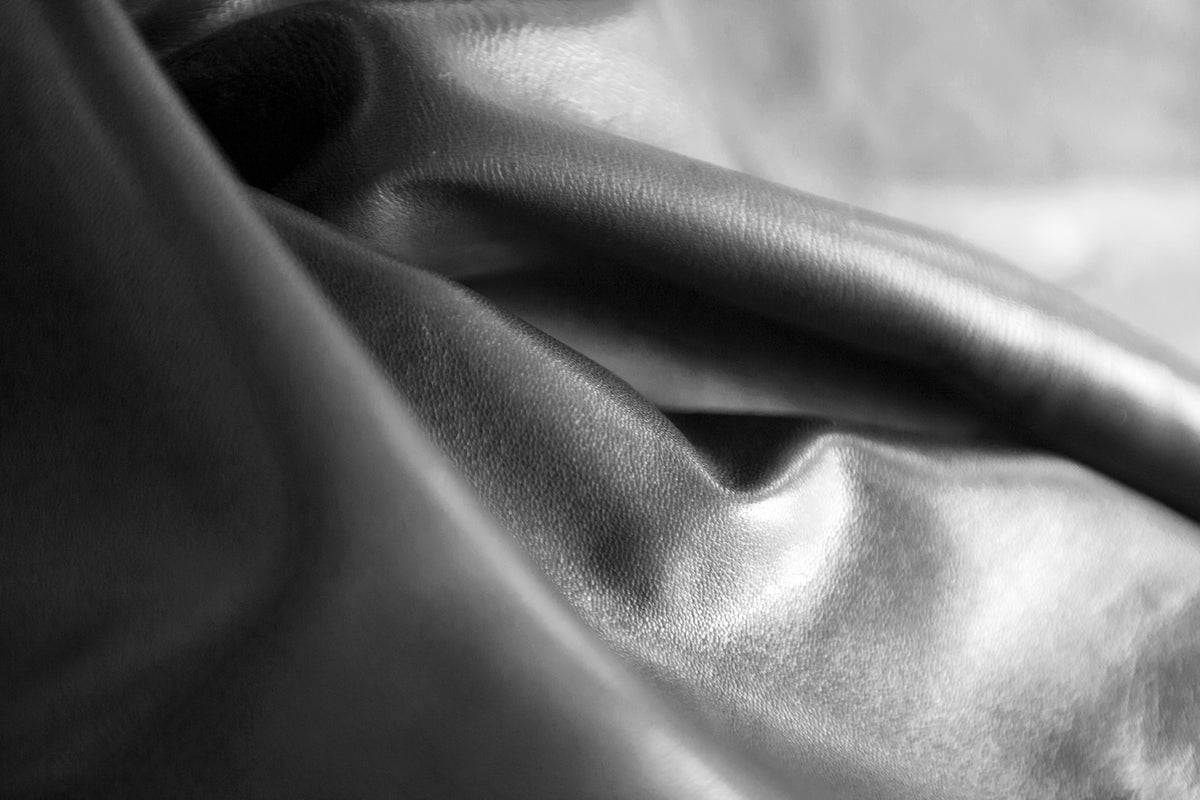
Understanding how is leather made reveals what makes this material so exceptional. At Jitrois, we work with a living material whose every creation step determines its strength, grain, and ability to age with elegance. Far from a simple industrial process, leather manufacturing is a centuries-old craft that combines chemistry, patience, and expertise. Discover the stages that transform raw hide into luxury material.
River Work: Preparing the Raw Hide
Before becoming leather, hide undergoes a series of treatments called “river work.” This phase is decisive: it prepares the material and eliminates anything that will not become leather.
It begins with soaking, which rehydrates and desalts the hide after drying and transport. Warm water awakens the fibers and restores suppleness to hide that has become rigid. This is followed by unhairing, the stage where the epidermis and hair are removed chemically or mechanically. Fleshing then cleans the inner surface, removing subcutaneous tissue residue and fatty deposits.
Deliming neutralizes the chemical agents used previously, while bating degrades the elastic fibers that could compromise the malleability of the finished leather. Finally, pickling stabilizes the hide’s acidity by immersing it in a saline and acidic solution, preparing it for subsequent stages.
At the end of river work, only the dermis remains, the fibrous layer that will form the foundation of the leather.
Tanning: The Transformation Into Leather
Tanning is the central stage, the one that irreversibly transforms hide into leather. It involves fixing chemical agents (tannins) within the interstices between dermis fibers, creating a stable bond that makes the material impervious and water-resistant.
Tannins bind to collagen naturally present in the dermis, forming an enduring structure. Several tanning methods exist, adapted according to the type of leather sought:
Vegetable tanning: the world’s oldest tanneries still use this method. Hides pass alternately through 5 to 8 vats containing increasingly concentrated tannin solutions, spending 8 to 15 days per vat. This process can extend over several months, but produces leather of superior quality, capable of developing a unique patina over the years.
Chrome tanning: faster and more economical, this modern process accounts for 80% of global production. It occurs over approximately 24 hours and gives leather greater dimensional stability and more uniform color.
At Jitrois, we favor approaches that respect the material and guarantee the durability of each piece.
Crust Processing: Post-Tanning Work
Once tanning is complete, leather enters the crust processing phase, where it is dried, softened, and worked to obtain desired tactile and visual properties.
Leather sometimes undergoes chamois finishing, which softens it deeply through specialized treatments. Then comes splitting to thin it to the desired thickness. Pressing or calendering flattens the surface and creates uniform texture. At this stage, leather can also be dyed through immersion or spray application, according to the desired color.
These crust processing operations require fine expertise: they shape the grain, softness, and final appearance of the leather. This is where the Maison’s love of detail intervenes to guarantee exceptional skins.
Finishing: The Final Step Before Production
The finishes applied to leather ensure its protection and refine its aesthetic rendering. They include the application of varnish, resins, or waxes that seal the surface and increase resistance to stains and moisture.
Some leathers receive light sanding to create a velvety texture, while others are left with more pronounced natural grain. Transparent or lightly pigmented topcoats finalize the surface.
It is during this phase that each piece acquires its distinctive character: shine, matte effect, subtle hue. For stretch leather, this stage incorporates additional treatments that impart the elasticity signature of the Maison, while preserving the material’s robustness.
Summary of Main Stages
| Stage | Average Duration | Objective |
|---|---|---|
| River work | 1 to 2 weeks | Prepare the dermis |
| Tanning | 1 to several months | Fix tannins, make impervious |
| Crust processing | 1 to 2 weeks | Soften, thin, dye |
| Finishing | 3 to 5 days | Seal, protect, create final rendering |
Frequently Asked Questions
How long does it take to make leather?
The complete process takes several months depending on the tanning method. Chrome tanning is faster (24 hours), while vegetable tanning can take several weeks to months, followed by crust processing and finishing phases.What is the difference between vegetable tanning and chrome tanning?
Vegetable tanning uses natural tannins extracted from tree bark and produces premium leather capable of developing a unique patina. Chrome tanning is more economical, faster, and accounts for 80% of global production, offering greater uniformity.Why does leather develop a patina?
Leather's natural patina results from the progressive oxidation of tannins and the accumulation of use marks over time. It is a sign of authenticity and quality that marks the nobility of the material.Is stretch leather made using the same manufacturing process?
Yes, [nappa leather](/en/blog/what-is-nappa-leather/) stretch at Jitrois undergoes the same manufacturing steps, enriched with a specific treatment that adds elasticity while preserving strength. Discover how we work [leather couture](/en/blog/what-is-leather-couture/) to create timeless pieces.Understanding how is leather created allows you to appreciate the subtlety of each leather jacket women or piece from the Maison, and to better recognise quality leather. Each stage contributes to forging a material capable of lasting decades, refining with age, and offering exceptional comfort. At Jitrois, this rigor in the process is not optional: it is the foundation of our commitment to excellence.