
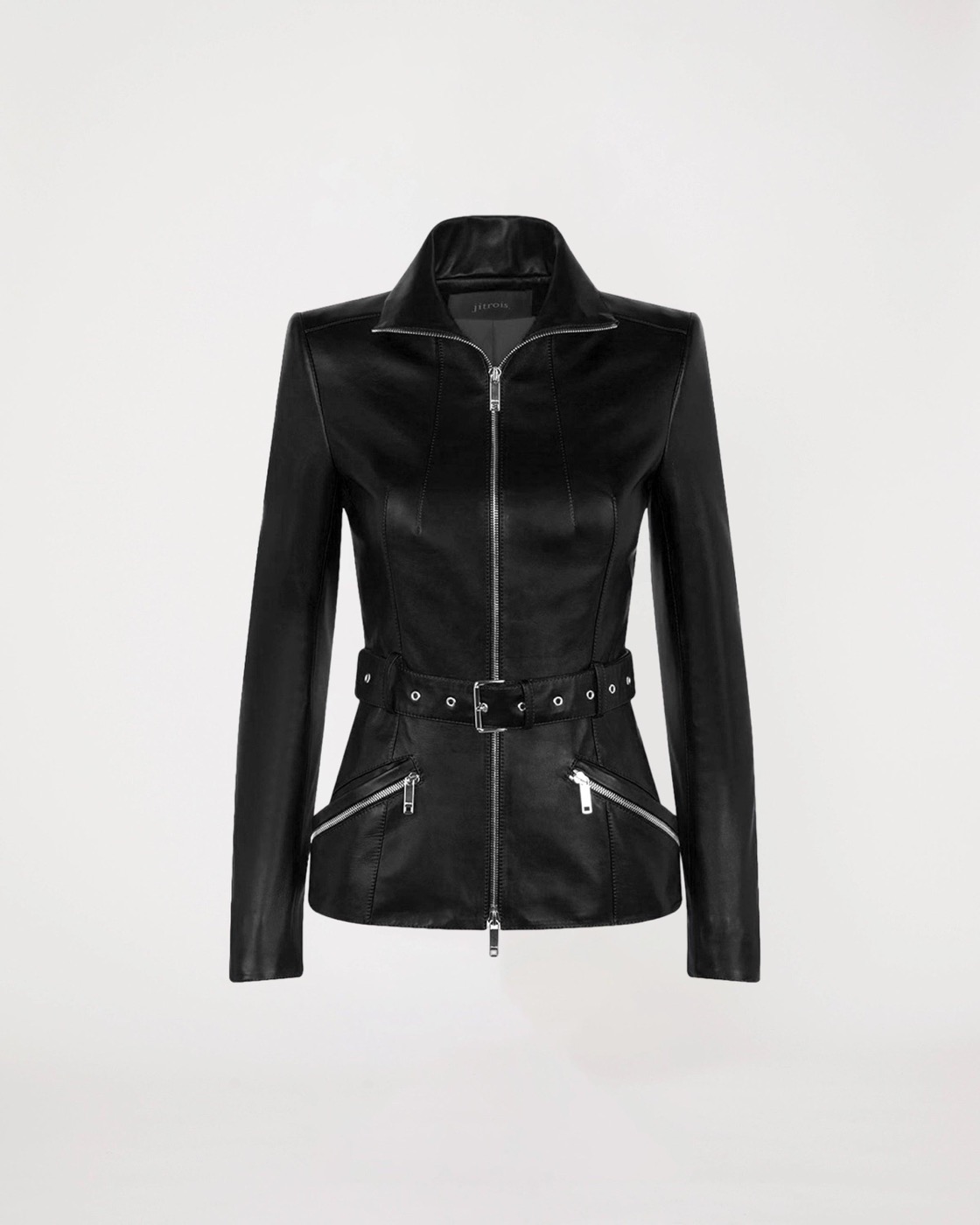
Some workshop words end up circulating without anyone defining them. Plongé lambskin is one of them. It is neither a brand nor a commercial grade, but a precise dyeing process, and that process is what made our best-known invention possible.
What plongé means
A hide can receive its colour in two ways. It can be pigmented on the surface, much as you would paint a wall, or immersed in a dye bath that penetrates its full thickness. The second method is dyeing by immersion, and that is what the word plongé describes.
The difference is not only aesthetic. Colour applied to the surface forms a film that stiffens the material and reveals itself at the first fold, where the shade turns paler. Colour given by immersion lets the hide breathe, keeps its natural suppleness and stays identical everywhere, including in the folds and along the edge.
Why lamb suits the process so well
Not every hide reacts the same way to a dye bath. Lamb responds better than most, for a structural reason.
Its skin is fine, its fibres tight and regular, which lets the dye spread evenly without creating darker patches. A thick hide absorbs unevenly and calls for compensations in the finish that harden it. The qualities specific to this skin, which we set out in our guide to lambskin leather, find their best use here.
The result is a material that combines two rarely paired qualities, extreme suppleness and an intensity of colour that pigmented leathers never reach.
What plongé changes to the eye and the hand
To the eye, the colour of a plongé lamb has depth. It does not sit on the skin, it comes from within, which gives blacks a particular density and bright shades a saturation that surface pigment renders flat.
To the hand, the material is full and soft, without the slightly plasticised feel that thick finishes produce. It folds without marking, springs back, and falls. That quality of drape is what interests a couturier, because it brings the hide closer to a cloth.
The vocabulary of soft leather often invites confusion, and our piece on nappa leather helps separate what belongs to the finish from what belongs to the dye.
From plongé lamb to stretch leather
This is where the process meets the history of the House. In the early 1990s, Jean-Claude Jitrois was looking for a leather able to follow the body without constraining it. The answer came from this precise material.
The grain side of a plongé lamb, carefully preserved, is bonded onto a cotton and Lycra base. The hide keeps its nobility, its colour and its hand, but gains a controlled elasticity. For the first time, a leather garment could hug the silhouette like a second skin.
Plongé lamb lent itself to that treatment particularly well, which is why it remains at the heart of our collections. The detail of the material and its variants appears on the page devoted to Jitrois leather, and our article on stretch leather explains how it works.
Recognising a beautiful plongé lamb
Three gestures are enough, and all of them can be done in a boutique without embarrassing anyone.
- Fold the material slightly and watch the colour inside the fold, it should stay identical
- Release the hide and see whether it springs back on its own, without keeping the mark
- Look at the edge when it is accessible, the shade should be exactly the same there
A fourth sign, less measurable, is regularity. A beautiful plongé hide shows an even colour from one end of the garment to the other, which requires selected skins and attentive cutting. That is precisely what leather couture demands, and what separates an atelier piece from a production-line one.
Frequently asked questions
What is plongé leather?
The word describes a dyeing method. The hide is fully immersed in a dye bath instead of receiving colour applied to its surface. The shade then penetrates the whole thickness of the material, which gives a deep colour and far greater suppleness. That process is what defines a plongé leather, whatever species the hide comes from.
What is the difference between plongé lamb and nappa lamb?
The two terms describe different things. Nappa refers to a family of soft, smooth finishes, very often produced on lamb. Plongé refers to the way the colour was given, by full immersion. A hide can be described as a plongé nappa lamb, the two words complete each other rather than compete.
Why is plongé lambskin so supple?
Three factors combine. Lamb hide is naturally fine and light, with tight fibres. The dye bath softens the material instead of loading it with a surface layer. And no rigid finish comes to stiffen the grain. The result is a material that folds without cracking and follows the movement of the body.
Is plongé leather easy to recognise?
Yes, by three signs. The colour stays identical inside a fold, whereas a surface-dyed leather turns paler there. The hand is soft and full, without a plasticised feel. And the edge of the hide, when visible, shows the same shade as the surface, which is the signature of a leather dyed through.