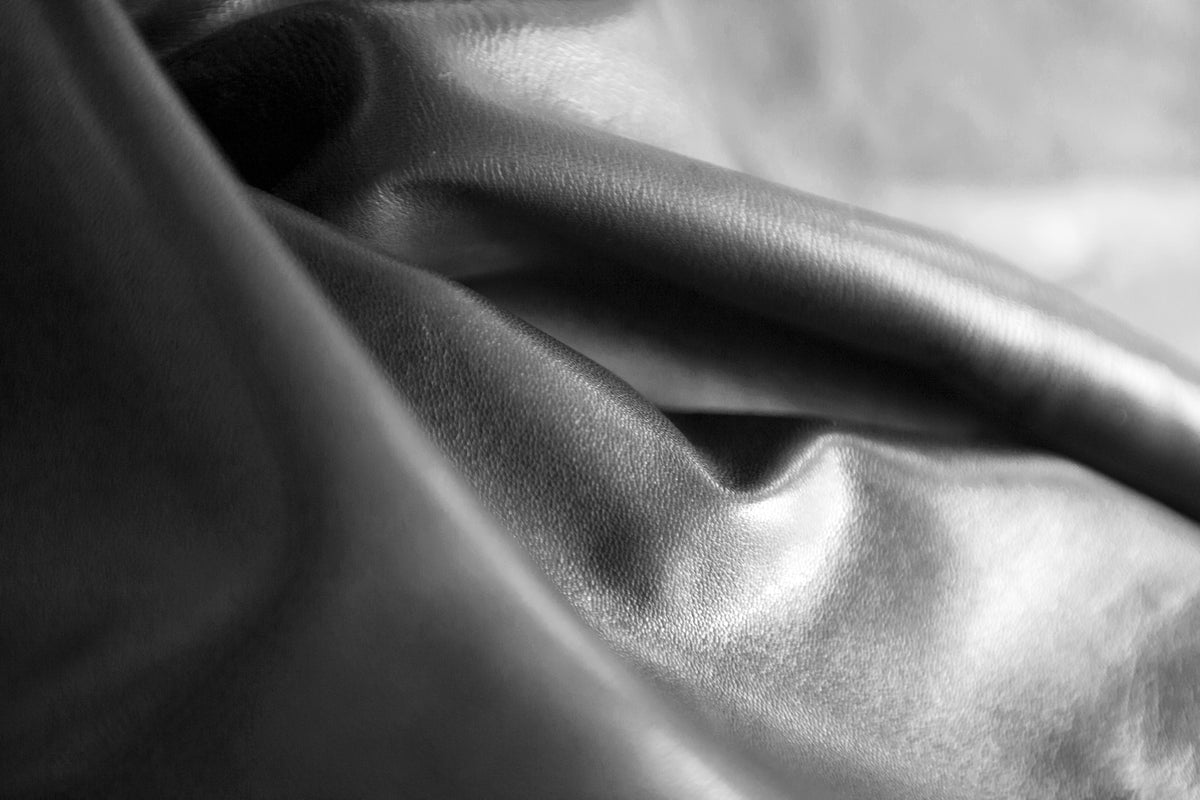
 © Jitrois
Nappa leather is one of those terms you come across everywhere, on a jacket, a bag, a car seat, without anyone taking the time to define it. Behind the word, however, lies a precious marker for anyone who wants to understand the quality of a leather. Material is at the heart of our craft at Jitrois, so here is a clear definition, its history and what it concretely changes for a garment.
In Brief
- Nappa refers to a smooth, supple full-grain leather, the original surface of the skin is kept intact.
- The name comes from the Napa Valley in California, where this type of tanning was developed in the 1870s.
- Lamb, calf or goat, several skins lend themselves to the nappa finish, lambskin being the finest and most sought after.
- Compared with sanded nubuck or corrected split leather, nappa is the noblest choice for garments.
- It is the base of the plongé lambskin that Maison Jitrois works, all the way to its stretch leather.
A Definition
Nappa is neither an animal species nor a brand, it is a finish. The term refers by convention to a smooth, supple, full-grain leather. Full grain means that the outer surface of the skin, its densest and most resistant part, is kept as it is, without sanding or correction. The grain you see is that of the skin itself, not a printed pattern.
The tanning, most often with chrome or aluminium salts, is conducted to give the skin maximum suppleness. The result is recognisable at first contact, a soft and precise touch, a fluid drape, an even surface that catches the light beautifully.
Where the Name Nappa Comes From
The story begins in California, in the 1870s. Emanuel Manasse, a tanner at the Sawyer Tanning Company in the Napa Valley, developed a tanning process that produced a leather of then unheard-of suppleness. The name of the place remained attached to the process, then to the finish as a whole. A century and a half later, the word has become a worldwide standard in the vocabulary of leather, from leather goods to automotive upholstery.
Nappa, Nubuck, Split, Finding Your Way
Not all leathers are equal, and the vocabulary exists to tell them apart.
| Finish | Surface | Touch | Preferred use |
|---|---|---|---|
| Nappa | Intact grain, smooth | Soft, precise, fluid drape | High-end garments, gloves, luxury upholstery |
| Nubuck | Lightly sanded grain | Short velvet, matte | Shoes, textured accessories |
| Split leather | Lower part of the skin, often corrected | Stiffer, artificial grain | Entry-level products |
The hierarchy is simple, the more the original grain is preserved, the nobler the leather. Nappa sits at the top of that scale for garments, it is the first marker to check when you assess the quality of a leather piece.
Nappa in Garments, Lambskin Above All
While nappa can come from calf, sheep or goat, luxury clothing favours lambskin, whose skin is the finest and most supple. Nappa lambskin offers a tight grain, a delicate hand and a lightness that other skins do not reach.
It is this material, in its most demanding form, plongé lambskin dyed through, that serves as the base for the House’s work. Our stretch leather is its most accomplished expression, the grain side of the plongé lambskin, carefully preserved, is bonded onto a cotton and Lycra base to give nappa what no leather had offered before, the elasticity of a second skin. This meeting between a noble material and a technical innovation is the foundation of the leather couture we have practised since the 1980s.
In everyday life, the difference is felt immediately. A nappa leather skirt drapes fluidly where a corrected leather breaks, and a nappa lambskin jacket can be worn for hours without ever weighing you down. This level of standard is what explains what a House specialised in the material is worth.
Frequently Asked Questions
Is nappa leather a quality leather?
Yes, nappa refers by convention to a smooth, supple full-grain leather, meaning a leather whose original surface is intact, the noblest part of the skin. It is the preferred finish for high-end garments and luxury upholstery. Quality then varies with the animal, the selection of skins and the mastery of the tanning.
What is the difference between nappa leather and nubuck?
Nappa is smooth, it keeps the grain side of the skin intact and offers a soft, even touch. Nubuck also starts from the grain side, but it is lightly sanded to obtain a velvet effect. Nappa is the choice for supple, dressed garments, nubuck gives a matte, textured finish.
Where does the name nappa come from?
The name comes from the Napa Valley in California. It was there that Emanuel Manasse, a tanner at the Sawyer Tanning Company, developed in the 1870s a tanning process that produced an exceptionally supple, smooth leather. The name of the place remained attached to this type of finish.
Why is nappa lambskin so widely used in luxury clothing?
Because lambskin is the finest and most supple of the common skins, and the nappa finish preserves all of its softness. The drape is fluid, the touch precise, the grain even. It is the material of choice for high-end leather garments, and the base of the plongé lambskin worked by Maison Jitrois.